
Cape May VINELink Coverage
The service is New Jersey VINE, short for Victim Information and Notification Everyday, accessed through VINELink. Cape May County’s Corrections Division directly links the state service and says users may check custody information by internet or telephone and register for telephone or email notice when custody status changes. That direct county route makes VINE relevant to the Cape May County Correctional Center.
NJDOC also promotes New Jersey VINE notification, so a state-prison record may appear through a participating state source. Verify the agency displayed on the live result. A county detainee and a state prisoner are held by different custodians even when both are searchable through one interface. VINELink does not replace the NJDOC Offender Search fields or the county discharge report.
Federal BOP custody and ICE detention require separate official channels. VINELink should not be expected to show those systems. Municipal custody may also depend on whether the arresting agency contributes data or transferred the person into the county correctional center.
Search Cape May VINELink Records
Search one person at a time. Use the exact name and an inmate or offender identifier when available. A common name, alias, or misspelling can create a false match or no match. The agency, age or birth information, and record identifier should agree before the result is used or an alert is registered.
- Open VINELink and select New Jersey. Do not assume a saved link has retained the state or agency filter.
- Choose the person or custody search offered by the live interface. Enter the exact name or offender/inmate identifier.
- Review every potential match. Compare the agency, name, age or birth information, and identifying number rather than relying on the name alone.
- Open the correct record and read the current custody status and facility literally. Save the access date and time.
- If the person is still matched, use the registration option for future changes. A no-match result is not a release finding.
The New Jersey agency-selection interface is shown in the official VINELink image below.
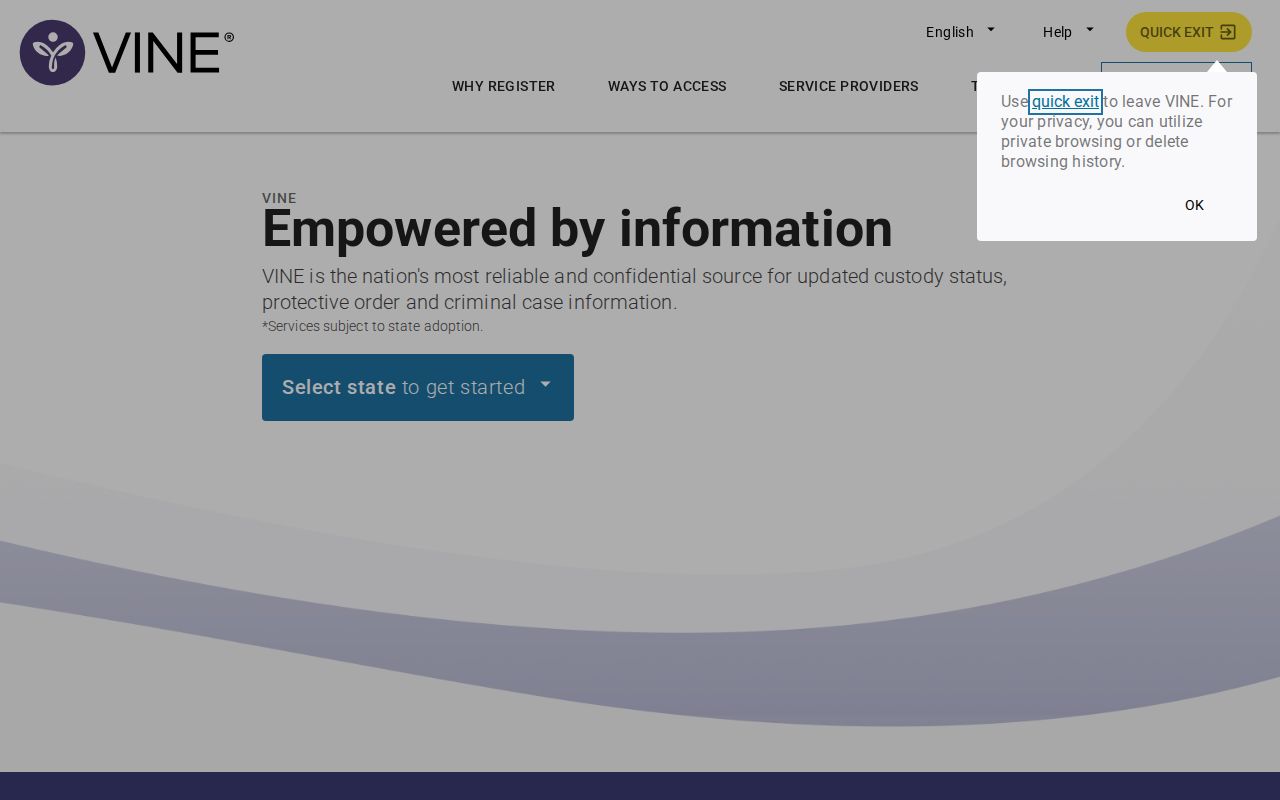
The agency choice is part of identity matching because the same person may move from Cape May County custody into a different system.
When a person is not found, retry known name variants and the identifier. Then contact the actual custodian. Do not turn “not found” into “released,” since it can reflect delayed data, a different agency, a search mismatch, transfer, or a record no longer displayed.
Cape May VINELink Release Fields
VINELink’s live field set can vary by contributing agency. Official Cape May material supports custody-status searching and status-change notice, but the research did not establish a durable, universal released-result format. Record only the labels shown in the specific matched result. Do not invent a “Released” badge or a release date when the interface supplies neither.
| Result element | How to read it |
|---|---|
| Name and identifier | Match the person to the correct agency record; use more than the name when possible. |
| Agency or facility | Shows the source contributing custody data, not every authority that may have a claim on the person. |
| Custody status | Read the displayed wording literally and note the access time; do not broaden it to a legal conclusion. |
| Custody event | May describe a release, transfer, escape, court movement, parole action, or another supported change. |
| Notification options | Use only the phone or email channels offered for the matched record in the live interface. |
| Release details | A released result may be limited or may cease to display; obtain the durable agency or court record. |
For a county release, Cape May Jail Records can establish the available local record route. For state prison, NJDOC’s Date Out-of-Custody and sentence history provide the documented state endpoint when retained and displayed. A future Current Max Release Date or Current Parole Eligibility Date is not proof that release took place.
Note: Save the exact VINELink event wording and time, then corroborate the result without adding a reason or destination it did not show.
Register Cape May Release Alerts
Register before the anticipated change, while the person still appears in custody. New Jersey’s official workflow supports telephone and email notices. Current button names and available channels can change, so follow the live choices tied to the matched record. Keep the registration details where they can be found when a call or message arrives.
- Open the verified inmate record and select “Register for Notification” or the current equivalent shown by VINELink.
- Choose telephone or email from the channels offered for that record and enter the destination accurately.
- Create a PIN if the telephone process requests one. Use a number that can be recalled when the automated call arrives.
- Complete any email or telephone confirmation required by the interface. Save the registration confirmation and record identity.
- When an automated call arrives, enter the PIN to acknowledge receipt and stop repeat calls. Preserve the notice wording and time.
- Confirm the event with Cape May Jail Records, NJDOC, or the court, based on the agency that held the person.
A notification is not a court order, a protective order, or a guarantee that notice will arrive before the event. Agency data can lag. Telephone registration is also available through New Jersey VINE at 877-846-3465, which offers another route when the web interface is unavailable.
Keep the PIN private but accessible to the registered recipient. If an alert repeats, acknowledge it through the offered process rather than changing the event wording from memory. A saved email or call log should retain the record name, contributing agency, event label, and receipt time. Those details let the facility distinguish the right person and event when a confirmation call is made.
Cape May VINE’s Local Role
Cape May’s own Corrections Division embeds the New Jersey VINE route rather than leaving users to discover it through a state directory. That local endorsement matters because the county’s public web list is current-only. A satisfied charge disappears on the next weekday update, and the list keeps no incarceration history. A prospective VINE registration can preserve awareness of the transition that the web roster does not archive.
This role has a firm limit. VINE is the alert layer, while Jail Records and the court supply durable event evidence. If the alert says “transfer,” the safe conclusion is transfer, not community release. If it says “release,” verify the contributing facility and related record before adding a date, reason, destination, or supervision claim.
The NJDOC victim-services source describing VINE is shown below.
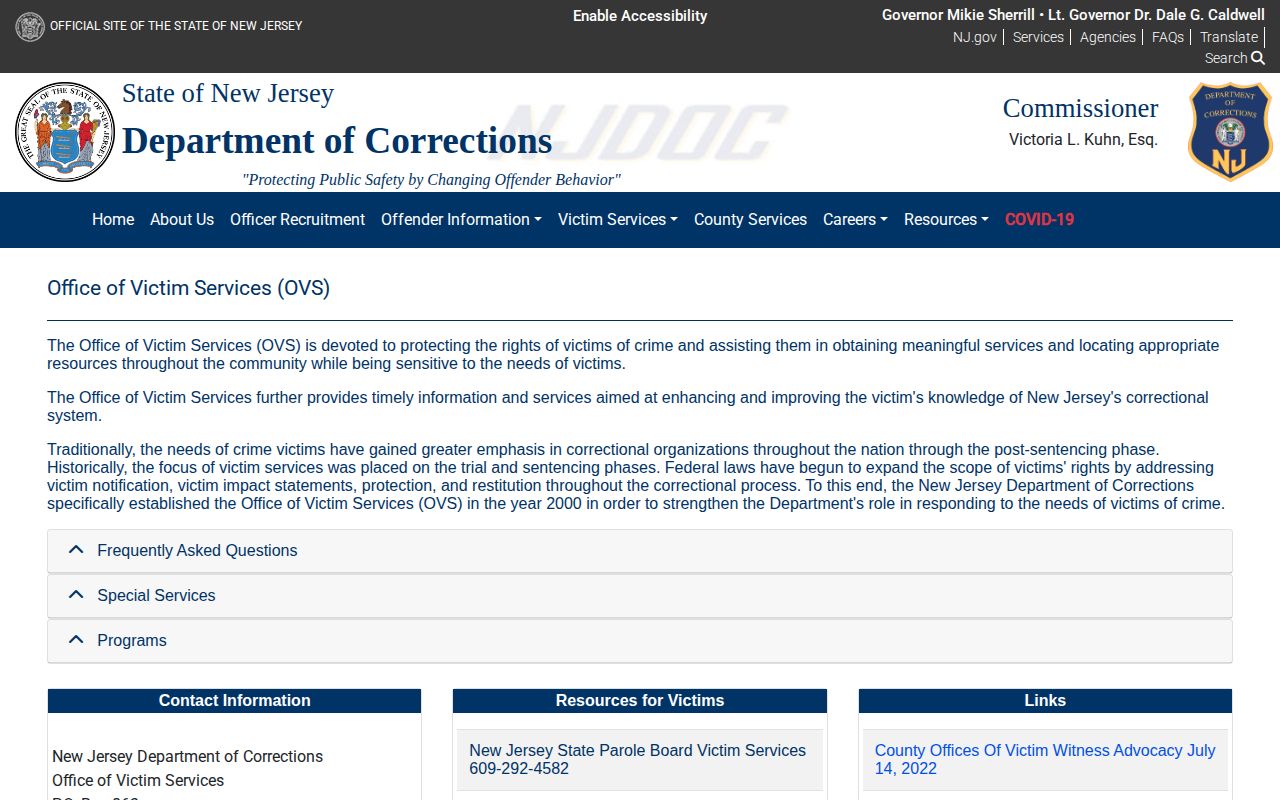
The state context supports notification use for NJDOC custody while keeping county and state record verification separate.
Confirm Cape May VINELink Alerts
The confirming office follows the custodian. For a Cape May County Correctional Center event, call Jail Records at 609-465-1233 and ask whether the person remains assigned to county custody and which public record can show the outcome. A focused OPRA request can seek the discharge report and release or transfer authority. The court case can explain the order, bail action, sentence, or later disposition behind the change.
For NJDOC, search by name and SBI or other identifying details, match the Cape May County commitment and case, and review incarceration history for Date Out-of-Custody. If parole may follow, contact New Jersey State Parole Board Public Information. Leaving prison custody does not always mean supervision has ended.
For a county record request, identify the custody episode by full name, date of birth if known, inmate ID, and an approximate admission and end range. Ask for the existing discharge or release entry and the release or transfer authority. If the alert concerned movement to another custodian, request the destination or receiving agency only if recorded and releasable. A narrow request is more likely to isolate the event than a demand for all inmate records.
The full Cape May County released inmate lookup separates county, state, court, federal, and immigration routes. That separation prevents a county VINE alert from being treated as proof about a BOP, ICE, or other authority’s custody.
Cape May VINELink Search Limits
New Jersey’s official material describes VINE in terms of people in custody and custody changes. It does not promise a permanent released-person archive. A past record may disappear or retain only limited details depending on the contributing agency. VINELink is therefore strongest before and during a transition, not months later when a durable discharge record is needed.
Timing can also differ among systems. Cape May’s current list updates only once on weekdays except holidays, while VINE depends on data from its contributing agency. A court order can appear before jail processing ends. NJDOC has its own incarceration-history fields. These clocks should be recorded separately instead of forcing them into one assumed release time.
- Custody alert
- A time-sensitive notice about the literal event reported by the contributing agency.
- Release record
- An agency or court record that documents the custody endpoint, authority, date, or transfer details.
- Transfer
- The end of one agency’s custody while another custodian takes control; it is not release to the community.
- Date Out-of-Custody
- NJDOC’s historical field for the date a documented state custody period ended.
VINE registration does not guarantee timing or safety. Data may arrive after facility processing, and the notification can cover several types of custody change. A no-match result is equally limited. Preserve what the service actually reported, identify the contributing agency, and obtain the agency or court record before stating the final outcome.
A transfer alert means the first custodian’s control changed, not that the person went home. An escape alert is also not a release. Court movement may be temporary, and a parole event can leave state supervision in force. Literal reading protects against a common error: converting any movement away from a facility into complete discharge from all custody and supervision.